Smartphone Star Filter: 5 Stunning Examples to Elevate Your Mobile Photos
Your smartphone camera is a powerhouse, but it cannot defy the laws of physics with software alone. Most creators settle for dull night photos or messy light blooms because they think cinematic flares require a bulky DSLR. If you have ever tried to add a sparkle effect using a mobile app, you know the results often look cheap and artificial. It’s time to stop relying on digital post-processing and start using professional glass.
You deserve crisp, natural starbursts that make your night photography pop. A dedicated smartphone star filter allows you to capture light diffraction as a deliberate storytelling element. Whether you use a clip-on lens or a precision magnetic mount, the right hardware changes the game. You will turn ordinary street lamps into brilliant focal points while maintaining perfect image clarity and professional standards.
This guide shows you how to transform your mobile lens into a cinematic tool. We will explore five stunning examples that prove a smartphone star filter is a must-have for your creative kit. Get ready to elevate your shots with simple, high-impact hardware solutions that deliver immediate results.
Key Takeaways
- Learn how etched optical glass creates natural diffraction for authentic, cinematic starburst effects.
- Master the use of 4, 6, and 8-point patterns to customize the geometry of every light source.
- Discover why a dedicated smartphone star filter is essential for achieving crisp results in urban and holiday photography.
- Perfect your technique with exposure locking and lens care tips that ensure professional-grade image clarity.
- Explore how professional-grade hardware provides a faster, more reliable alternative to digital post-processing.
What is a Smartphone Star Filter and Why Do You Need One?
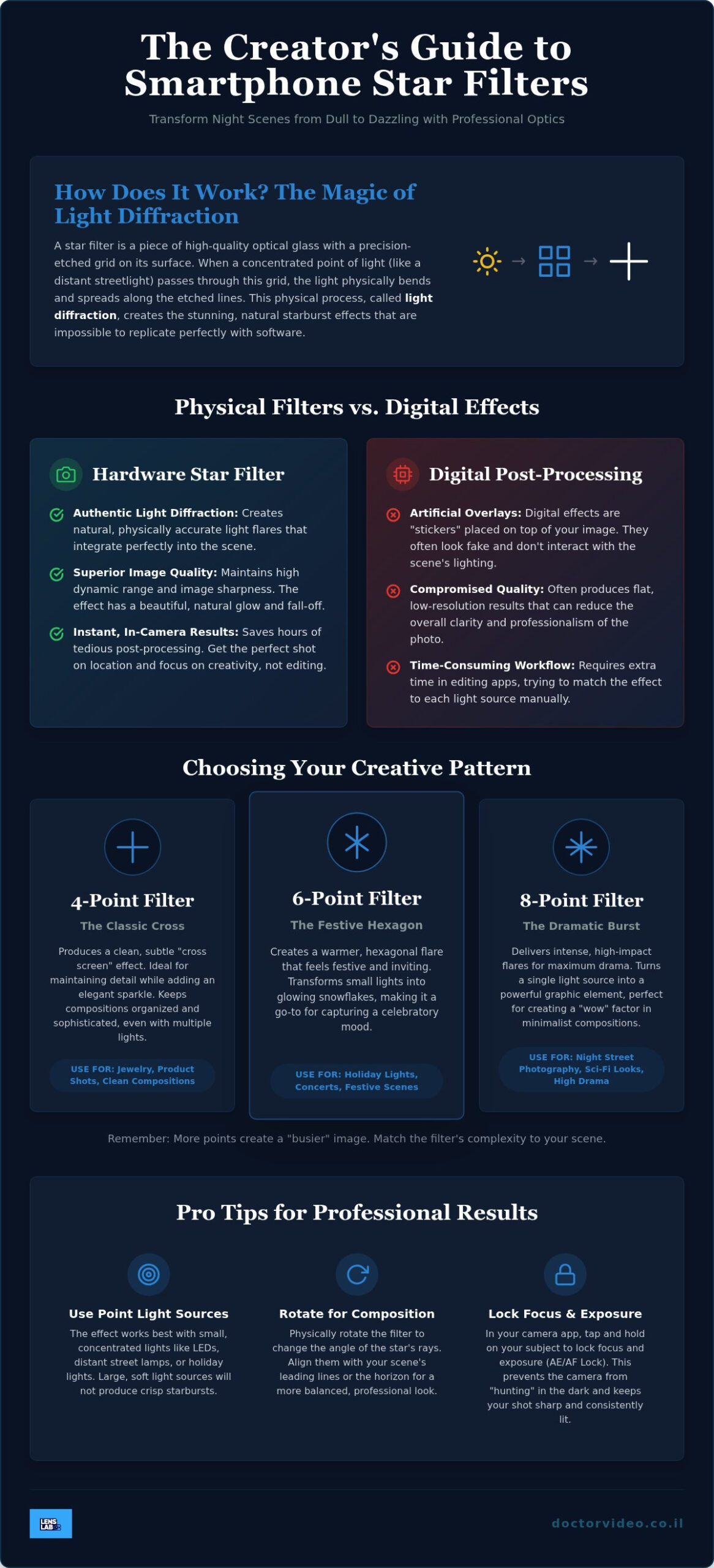
A smartphone star filter is a specialized piece of optical glass designed to transform light. Unlike digital effects that sit on top of your image, this hardware attachment uses physical etched lines to redirect light. These micro-grids catch point light sources and stretch them into beautiful, multi-pointed stars. It is the quickest way to add a cinematic, high-end feel to your mobile photography without touching a single editing app.
Serious creators use these filters to turn mundane night scenes into dreamy masterpieces. You don’t need a heavy DSLR to achieve professional results. By clipping or magnetically attaching a star filter to your phone, you gain immediate control over how your camera interprets light. It is about more than just a “sparkle” effect. It is about using physics to create a deliberate artistic mood that resonates with your audience. Stop settling for flat, uninspired night shots and start capturing the brilliance of the world around you.
The Magic of Light Diffraction
The secret behind every stunning starburst is a process called light diffraction. When light hits the precision-etched grid on your filter, it physically bleeds along those lines. This creates the “rays” you see extending from street lamps, candles, or even distant holiday lights. For the best results, you need a concentrated point of light. Large, soft light sources won’t trigger the effect in the same way. Light diffraction in mobile photography is the physical spreading of light waves as they pass across the precision-etched lines of a glass filter. This interaction creates a natural glow that feels integrated into the scene rather than forced.
Star Filters vs. Digital Post-Processing
Many beginners try to replicate this look using AI overlays or digital stickers. The results are usually disappointing. Digital effects often look flat and artificial because they don’t interact with the actual environment of your photo. A physical glass filter maintains a higher dynamic range. It preserves the natural glow and fall-off of light that software simply can’t mimic. You save valuable time in your workflow by getting the perfect shot in-camera. Instead of spending hours in post-production, you can focus on the next creative setup.
Using a smartphone star filter ensures your work stays authentic and professional. It provides a level of technical reliability that apps can never match. High-quality glass keeps your images sharp while adding that sought-after cinematic flair. By investing in real optics, you elevate your mobile production to a standard that stands out in a crowded digital landscape.
Choosing Your Pattern: 4-Point, 6-Point, and 8-Point Filters
Not all starbursts are equal. The geometry of your shot depends entirely on the filter pattern you select. The rule is simple. More etched lines on the glass result in more rays in your final image. This is a direct physical relationship. You also have full control over the angle of these rays. By rotating your smartphone star filter, you can shift the orientation of the stars. This allows you to align the light flares with the horizon or the lead lines of your composition for a balanced, professional look.
Choosing the right point count requires a strategic eye. A filter with more points creates a “busier” image. If your frame is filled with dozens of small light sources, a high-point filter might turn your photo into a chaotic mess. You must match the complexity of the filter to the number of lights in the frame. Minimalist scenes can handle high-drama flares. Busy urban environments often require a more restrained approach to maintain clarity and focus on your subject.
The 4-Point (Cross) Filter
The 4-point filter provides a classic, subtle look that never goes out of style. It produces two intersecting lines, creating what professionals call a “cross screen” effect. This pattern is ideal when you want to enhance a specific subject without overwhelming the entire frame. Use it for jewelry or product photography where maintaining fine detail is critical. It adds a touch of elegance and sparkle that feels intentional. Because the pattern is clean, it works exceptionally well in scenes with multiple light sources, keeping the composition organized and sophisticated.
The 6-Point and 8-Point Filters
When you want maximum visual impact, move to higher point counts. A 6-point filter creates a hexagonal flare that feels festive and warm. It is the perfect choice for holiday photography, transforming Christmas tree lights into glowing snowflakes. For those seeking high drama, the 8-point filter delivers intense flares. It turns every street lamp into a powerful graphic element, making it a favorite for minimalist night street photography. These filters provide the “wow” factor that stops people from scrolling. To explore these creative options, you can find a high-quality smartphone star filter designed for precision mobile optics.
Remember that balance is your best tool. Use the 8-point filter when you have a single, strong light source to create a dramatic focal point. Use the 6-point filter to add a soft, magical glow to evening landscapes. By understanding the specific mood each pattern creates, you transition from taking snapshots to crafting cinematic stories. Your choice of pattern is your signature as a creator. Experiment with different orientations to see how the light interacts with your environment in real-time.
5 Creative Examples of Star Filter Photography
You have the gear. Now it’s time to put it to work. A smartphone star filter is not just for night skies. It is a versatile tool that adds a layer of professional polish to a wide variety of subjects. By understanding how light interacts with the glass, you can create images that look like they belong in a high-end magazine. These five examples will help you master the art of the starburst and give your mobile portfolio a serious edge.
Styling the Urban Nightscape
City streets are the ultimate playground for star filters. Every street lamp, traffic light, and shop sign is a potential starburst. To maximize the impact, wait for a rainy evening. Wet pavement acts as a giant mirror, doubling your star count through reflections. Keep your phone steady. Even a slight tremor can blur the sharp rays of the stars. Use a wide-angle lens to pull more light sources into a single frame. This creates a dense, geometric grid of light that feels structured and cinematic. It turns a standard city walk into a high-concept production.
- Holiday Magic: Transform your 2026 holiday photos. Make Christmas tree lights sparkle with a festive warmth that software filters can’t replicate.
- Concerts & Events: Capture the raw energy of the stage. Use the filter to turn intense stage lights and audience phone flashes into exploding points of light.
- Golden Hour Water: Don’t wait for the sun to go down. During the golden hour, the sun reflecting off waves creates thousands of tiny, shimmering stars across the water.
Product Photography with a Glint
Small business owners use the star filter as a secret weapon. It adds a “glint” of luxury to watches, rings, or glass bottles that immediately signals high quality. You don’t need a professional studio setup to get this look. Place a small LED light just out of the camera’s frame. Position it so the light just catches the edge of your product. This creates a single, sharp starburst that draws the eye exactly where you want it. It makes your products look expensive and meticulously curated.
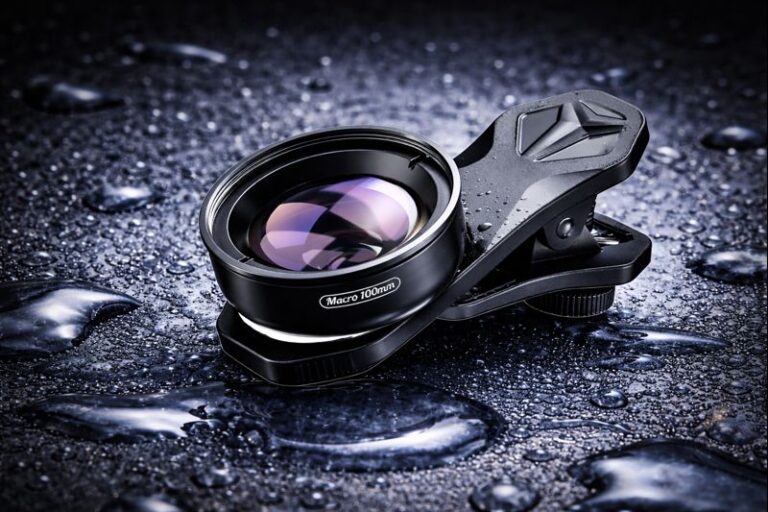
For even more detail, combine your filter with a 10X Macro Lens. This combination allows you to get incredibly close to jewelry or intricate textures while maintaining that signature sparkle. It is the perfect setup for social media content where visual “pop” is everything. By getting the shot right in-camera, you maintain professional standards and save hours of tedious editing. Your audience will see the difference in the clarity and natural behavior of the light.
Experiment with different light intensities. Sometimes a subtle glow is better than a massive flare. The more you practice, the more you will realize that a smartphone star filter is about precision as much as it is about style. Use it to highlight the best features of your subject and command the viewer’s attention with every post.
Pro Tips for Shooting with Star Filters on Mobile
Owning a smartphone star filter is the first step toward cinematic greatness. Mastering the technique is the second. Even the best optics require a thoughtful approach to lighting and composition. You are in control of the physics. Small adjustments in how you handle your phone can mean the difference between a messy snapshot and a professional masterpiece. Follow these pro-level strategies to ensure every ray of light works in your favor.
Start with a clean slate. Cleanliness is absolutely critical when working with etched glass. Even a tiny smudge or fingerprint will ruin the precision of the diffraction lines. Instead of a sharp star, you will get a hazy, unfocused blur. Keep a bottle of Lens Cleaning Spray in your kit at all times. Wipe your filter before every session. This simple habit preserves the integrity of the glass and ensures your starbursts remain crisp and defined.
Don’t forget the rotation trick. Most high-quality star filters allow the glass to spin within the mount. Use this to your advantage. Rotate the filter to align the star rays with your horizon or the leading lines of your shot. This creates a sense of intentionality and balance. It transforms a random effect into a deliberate compositional element. If the stars look crooked or distracting, a quick spin of the filter will fix the alignment in seconds. Avoid light pollution by being selective with your frame. Too many competing light sources can turn your photo into a messy blur of overlapping rays.
Mastering Exposure and Focus
Overexposed lights are the enemy of the starburst. When a light source is too bright, the rays lose their sharp shape and become glowing blobs. You must manage your exposure manually. To maintain consistent flare shapes across your shots, tap and hold on the light source to engage the AE/AF lock and manually slide the exposure bar down until the star rays appear sharp and defined. This prevents the camera’s AI from over-brightening the scene. Be careful with Night Mode as well. While it helps in low light, the long exposure can sometimes soften the diffraction lines. Test your shots with and without it to see which delivers the punchiest results.
Stacking Filters for Pro Results
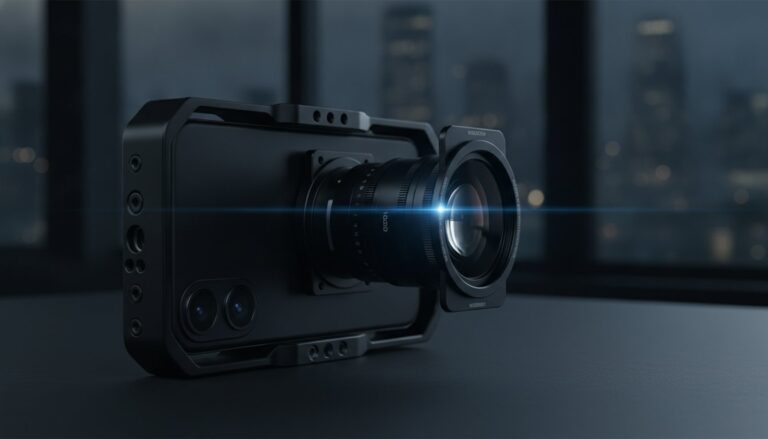
Advanced creators often stack their optics for unique looks. You can combine your star filter with a CPL or ND filter to control reflections or manage bright daylight. The JJC Magnetic Lens Filter Mount makes this process effortless for iPhone users. It allows you to swap or stack filters in seconds without fumbling with clips. Watch out for lens flare when using multiple pieces of glass. Internal reflections can occur when light bounces between the layers. Keep your light sources centered to minimize unwanted artifacts. Ready to build your ultimate mobile kit? Get your professional smartphone star filter here and start creating today.
Elevate Your Creator Kit with LensLab Filters
Choosing the right hardware is as important as the shot itself. The smartphone star filter from LensLab is built for creators who refuse to compromise on quality. Most generic filters use cheap plastic that degrades your image and softens your focus. Our filters feature professional-grade optical glass. This ensures maximum durability and edge-to-edge clarity in every frame. You get the same high-end results as a traditional cinema lens, tailored specifically for the mobile production environment. Stop settling for low-quality attachments and give your camera the glass it deserves.
Compatibility is never an issue with our ecosystem. Whether you use an iPhone or an Android device, our gear is designed to fit your workflow perfectly. iPhone users can utilize the JJC Magnetic Lens Filter Mount for precision alignment and rapid swapping. This magnetic system allows you to switch between filters in seconds. It is the ultimate solution for creators who need to stay agile while shooting in the field. Join a global community of mobile cinematographers who are redefining what is possible with a phone camera. Your creative potential is limitless when you have the right tools in your pocket.
The LensLab Advantage
We understand the rapid pace of digital content creation. That’s why we offer fast shipping and 24/7 support for creators on the go. Our optics are trusted and tested by influencers in 20+ countries. This global validation proves that our tools perform under diverse conditions, from neon-soaked streets in Tokyo to festive markets in Europe. You aren’t just buying a piece of glass. You are investing in a creative partner that understands the demands of modern storytelling. Maintaining your gear is just as vital as using it correctly. Always use a smartphone lens cleaning kit to keep your diffraction lines free from dust and oils. Professional results require a pristine surface, and we provide everything you need to keep your kit in top shape.
Ready to Sparkle?
A star filter changes the creative game completely. It turns standard light sources into cinematic focal points that command attention. You no longer need to rely on flat digital overlays or artificial AI effects. You have the power to capture authentic light behavior in real-time. Upgrade your mobile kit today and start seeing the world through a more brilliant lens. The 2026 holiday season is the perfect time to showcase your new skills and capture the magic of the lights. Elevate your production value and command the attention your work deserves with professional optics. It is time to turn your vision into a reality.
Shop the LensLab Star Filter Collection
Transform Your Vision into Reality
You now have the blueprint for cinematic mobile photography. By moving beyond digital overlays and embracing professional glass, you have unlocked a new level of creative control. Your choice of pattern sets the emotional tone for your entire composition. Whether you opt for a subtle 4-point cross or a dramatic 8-point flare, you’re making a deliberate artistic statement. You’ve learned how to manage exposure and keep your optics pristine for the sharpest results possible.
Achieving professional standards is no longer reserved for those with expensive DSLR rigs. With a high-quality smartphone star filter, you can capture authentic light behavior that resonates with your audience. Our optics are trusted by serious creators in 20+ countries. They deliver high-definition results and work seamlessly with magnetic mounting systems for effortless swapping. This efficiency allows you to focus on your story rather than your settings.
Don’t let another night of dull photos pass you by. Take the leap and invest in tools that match your creative ambition. It’s time to stop relying on post-processing and start creating in-camera. Upgrade your mobile shots with the LensLab Star Filter and start capturing the world in its best light. Your next masterpiece is waiting for you to press the shutter.
Frequently Asked Questions
Do star filters work on all smartphone cameras?
Yes, star filters are compatible with almost every smartphone on the market today. You simply need a reliable mounting solution to position the glass over your camera lens. Whether you use a universal clip or a precision magnetic system, the diffraction effect remains consistent across different sensor sizes and lens types.
Will a star filter reduce the sharpness of my photos?
Professional-grade optical glass will not noticeably reduce your image sharpness. Using a high-quality smartphone star filter ensures that light diffraction happens without adding unwanted haze or distortion. Avoid cheap plastic alternatives. Those lower-quality materials often lead to soft edges and a loss of fine detail in your night shots.
Can I use a star filter for video recording?
Absolutely. These filters are excellent for mobile cinematography and add a dynamic, cinematic flare to every light source in your frame. This is a popular technique for music videos, event coverage, and night-time city b-roll. It emphasizes the energy of the environment as the camera moves through the scene.
How do I attach a star filter to my iPhone?
The most efficient way to attach a filter to your iPhone is with the JJC Magnetic Lens Filter Mount. This adapter snaps onto your phone and allows you to swap filters in seconds. It ensures your smartphone star filter is perfectly centered over the camera lens for the most symmetrical and professional starburst patterns.
What is the difference between a star filter and a streak filter?
Star filters create multi-directional rays from a single point of light, resulting in a geometric sparkle. Streak filters create a single, horizontal line that mimics the look of an anamorphic lens. Choose a star filter when you want a festive or “twinkle” effect. Choose a streak filter for a sci-fi or classic cinematic flare.
Do I need a tripod to use a star filter at night?
You don’t strictly need a tripod for standard star filter shots. Handheld shooting works perfectly if you have enough ambient light or use your phone’s internal stabilization. However, a tripod is a great asset for long-exposure nightscapes. It ensures the rays of your stars stay perfectly sharp and prevents any motion blur from ruining the diffraction lines.
How do I clean the etched lines on a star filter?
Use a professional Lens Cleaning Spray and a clean microfiber cloth to maintain your glass. Never use your shirt or a rough paper towel. The etched lines on the glass are precision-engineered. Oils from your skin can fill these microscopic grooves and dull the starburst effect. Regular maintenance keeps your optics performing at a professional standard.
Can I stack a star filter with a macro lens?
Stacking a star filter with a 10X Macro Lens is a pro-level move for product photographers. This combination allows you to capture extreme close-ups of jewelry or watches while adding a brilliant glint to the highlights. It makes small details pop and gives your macro work a sophisticated, high-end finish that stands out on social media feeds.