IPhone Filmmaking Kit: The 2026 Guide to Cinematic Mobile Gear
What if the only thing standing between your smartphone footage and a Hollywood masterpiece isn’t the sensor, but the glass in front of it? You’ve likely felt the frustration of a perfect shot ruined by shaky movement or harsh, blown-out highlights that scream “amateur.” Even with the iPhone 17 Pro Max now supporting ProRes RAW, raw mobile video can still feel too digital and lack the organic texture of real cinema.
Building a professional iPhone filmmaking kit is the secret to solving these issues through optical physics rather than just software filters. You will learn how to transform your device into a high-performance production hub that delivers smooth motion blur and those iconic, wide-screen aspect ratios. This guide previews the essential hardware you need, from magnetic filter mounts to anamorphic lenses, to create a versatile and portable setup that rivals traditional cameras. It is time to stop settling for “good enough” and start capturing footage that commands attention.
Key Takeaways
- Capture signature blue flares and ultra-wide aspect ratios by adding anamorphic glass to your mobile rig.
- Master the 180-degree rule with ND filters to ensure your footage has professional, smooth motion blur.
- Assemble a custom iPhone filmmaking kit that pairs advanced optics with magnetic mounting for a fast, portable production setup.
- Swap lenses in seconds using magnetic adapters to keep your creative momentum flowing during run-and-gun shoots.
- Transform your smartphone into a cinema camera by prioritizing high-quality hardware over software-based digital effects.
Why Your iPhone Needs a Professional Filmmaking Kit
Your iPhone is no longer just a communication device. By 2026, it has become the most powerful entry point into the world of professional cinematography. However; a raw smartphone still lacks the physical weight and optical depth required for high-end production. An iPhone filmmaking kit bridges this gap. It is a strategic collection of lenses, filters, and mounts that transforms a mobile device into a versatile cinema camera. While the internal software handles the data, the external hardware handles the physics.
Upgrading your mobile setup is significantly more cost-effective than investing in a dedicated mirrorless system. A professional camera body and a set of prime lenses can easily cost thousands of dollars more than a fully rigged iPhone. By leveraging the device already in your pocket, you can allocate your budget toward high-quality glass. This approach allows you to achieve 4K, 120p results without the bulk or the massive price tag of traditional cinema gear. It is the smartest way to achieve professional results on a realistic budget.
The Optical Advantage: Beyond Digital Zoom
Digital processing has its limits. Even with advanced AI upscaling, digital zoom eventually destroys image detail and introduces digital noise. External glass solves this by changing how light actually hits the sensor. When you use a dedicated lens, you preserve every pixel of data. This is vital for maintaining professional standards in low light or high-contrast scenes. True optics provide a natural depth of field and organic light flares that software simply cannot replicate. You aren’t just fixing it in post; you are capturing the right image from the start.
The Creators Mindset: Professionalism on the Move
Speed is your greatest competitive advantage. Traditional film sets take hours to rig. A mobile creator can be ready in minutes. This portability allows you to capture authentic moments that a bulky camera would miss. Transitioning to a professional iPhone filmmaking kit signals a shift in your mindset. You stop recording clips and start crafting scenes. This intentionality is what separates viral, high-production content from casual social media posts. A reliable gear ecosystem ensures that when inspiration strikes, your hardware is ready to perform at a professional level.
The Optical Core: Anamorphic and Wide Angle Lenses
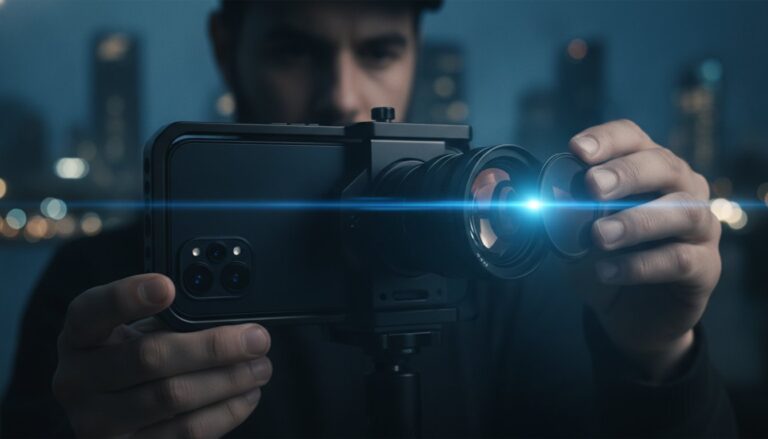
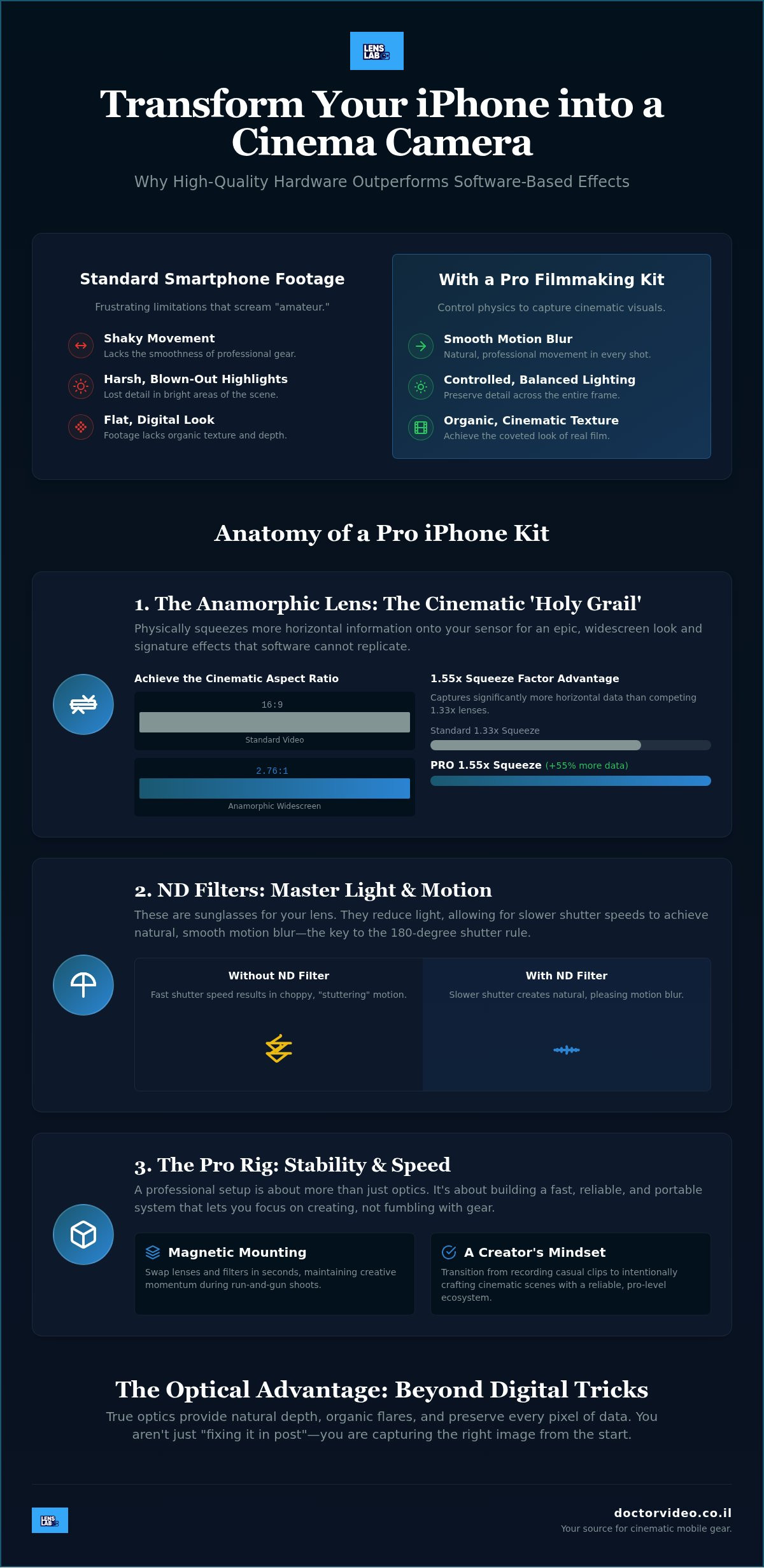
If you want your footage to look like a blockbuster, start with the glass. The anamorphic lens is widely considered the “Holy Grail” of any professional iPhone filmmaking kit. It does something software simply cannot. It physically squeezes more horizontal information onto your sensor. This creates an ultra-wide 2.76:1 aspect ratio that feels epic and immersive. While standard mobile video often looks like a home movie, anamorphic footage looks like cinema.
The visual signatures are unmistakable. You get those iconic blue horizontal lens flares when light hits the glass. You also get beautiful, oval-shaped bokeh in the background. These characteristics provide an organic, textured look that separates your work from the millions of “clean” digital videos posted every day. It is the fastest way to add high production value to your storytelling. You aren’t just capturing video; you are creating an aesthetic. For a comprehensive breakdown of squeeze factors, de-squeezing workflows, and how to choose the right optic for your device, the smartphone anamorphic lens guide for cinematic mobile video in 2026 is an essential resource.
Mastering the 1.55X Blue Anamorphic Lens
The PRO 1.55X BLUE ANAMORPHIC LENS is designed for creators who demand the widest possible field of view. Most competitors offer a 1.33x squeeze, but the 1.55x version provides a more dramatic cinematic stretch. This lens captures 55 percent more horizontal data. To use it, you must “de-squeeze” the footage in post-production using professional camera apps. If you are curious about how this tech translates to other platforms, check out this Anamorphic Lens for Android: The Ultimate Cinematic FAQ (2026). Mastering this workflow is the key to unlocking true widescreen power.
Expanding the Frame with Wide Angle Glass
Sometimes you need to see the whole world. While the built-in ultra-wide camera on modern iPhones is convenient, it often suffers from heavy barrel distortion and loss of detail at the edges. A dedicated 16mm Wide Angle Lens for Smartphones offers a superior solution. It provides a massive field of view while maintaining edge-to-edge sharpness. This makes it the ideal choice for real estate tours, travel vlogging, and landscape cinematography.
High-quality wide-angle glass preserves the straight lines in your architecture shots. It prevents your subjects from looking warped or stretched. Whether you are shooting an immersive tour of a luxury villa or a sweeping mountain vista, this lens keeps the image professional. You can easily find these professional tools in our cinematic mobile gear collection to start upgrading your rig today. This is the foundation of a truly versatile iPhone filmmaking kit.
Light Control: ND Filters and Cinematic Special Effects
Control the light, and you control the mood. High-quality ND (Neutral Density) filters act as sunglasses for your camera. Without them, your smartphone struggles in bright daylight. It compensates by increasing the shutter speed to extreme levels. This results in jittery, hyper-sharp footage that looks like a cheap news broadcast rather than a cinematic masterpiece. To achieve professional results, you must master the 180-degree rule. This rule dictates that your shutter speed should be exactly double your frame rate. If you shoot at 24fps, your shutter must be 1/48. An ND filter is the only way to reach those slow speeds in the sun without overexposing your shot.
Using these filters allows you to capture natural motion blur. This blur is what the human eye expects to see in a movie. It smooths out movement and gives your iPhone filmmaking kit the power to handle any lighting environment. You stop fighting the sun and start using it to your advantage. It is the difference between a video that looks “digital” and one that looks like film.
The Essential ND Filter Set
A 4-Pack ND Filter Set is a vital component for any serious creator. These fixed filters provide specific strengths to match your environment, whether it is a cloudy afternoon or high noon in the desert. Fixed ND filters are often superior to variable versions because they maintain perfect color accuracy. You don’t have to worry about the dreaded “X” pattern or weird color shifts in your highlights. This technology follows the same professional standards found in our guide on GoPro HERO 12 ND Filters: The Ultimate Guide to Cinematic Action (2026). Consistency is the key to a professional workflow.
Specialty Glass for Night and Mood
Night cinematography requires a different kind of creative magic. A Star Filter for Smartphones is a game-changer for urban shoots and music videos. It transforms streetlights and reflections into stunning multi-point stars. This creates a stylized, high-end look that feels intentional and artistic. You can even stack filters to build a unique visual signature. Imagine pairing a star filter with anamorphic glass to create a dreamy, neon-soaked atmosphere. This level of optical control is what separates a serious filmmaker from a casual user. It allows you to tell stories with light, not just capture it.
Stability and Mounting: Building the Pro Rig
A cinema camera is only as good as its foundation. If your lenses are misaligned or your grip is unstable, your production value drops instantly. A professional iPhone filmmaking kit requires a robust mounting system to keep your gear secure. You need more than just a standard phone case. You need a structural ecosystem that supports external optics while allowing for rapid adjustments in the field. Precise alignment is critical. Even a millimeter of shift can cause vignetting or blur at the edges of your frame. A secure rig ensures that your glass stays exactly where it needs to be, shot after shot.
Stability isn’t just about avoiding shakes; it’s about control. When you add weight and structure to your phone, you gain the ability to make intentional camera movements. This modular approach allows you to scale your setup based on the project. You can go from a minimalist street-photography rig to a fully loaded cinema setup in minutes. This flexibility is what makes mobile filmmaking so powerful in 2026. You are no longer limited by the ergonomics of a thin piece of glass and metal.
JJC Magnetic Lens Filter Mount Adapter
Speed is the ultimate currency for modern creators. The JJC Magnetic Lens Filter Mount Adapter is a game-changer for anyone shooting on the move. It integrates seamlessly with the iPhone MagSafe ecosystem. You can snap filters on and off in less than a second. This eliminates the frustration of threading tiny filters while your light is fading. It allows you to switch from an ND filter for bright sun to a specialty star filter for night scenes without missing a beat. This magnetic system is far more efficient than traditional bulky cages. It keeps your setup light and portable without sacrificing professional capability. Upgrade your setup with magnetic precision today.
Adding Stability to Your Production
Shake is the enemy of cinema. While software stabilization is impressive, it often creates a “warped” look that screams mobile video. Using a dedicated grip or cage provides the ergonomic support needed for smooth handheld shots. These tools reduce hand fatigue during long production days. They also provide vital mounting points for external lights and microphones. A solid grip gives you three points of contact, which is the secret to steady, intentional camera movement. It turns a slippery smartphone into a tactile filmmaking tool that feels substantial in your hands.
Knowing when to use a gimbal versus a handheld grip is a vital skill. Handheld shots feel visceral and urgent. Gimbal shots feel floating and ethereal. Both have their place in a narrative. Most professional kits are designed to be modular. You should be able to move from a handheld grip to a tripod or a motorized gimbal in seconds. For a deeper look at the tools that enhance your workflow, explore our Cinematic Phone Camera Accessories: 2026 Creator’s Guide. Integrating your kit with professional stabilization ensures every frame is intentional. You aren’t just holding a phone; you are operating a camera system.
Building Your Custom LensLab Production Kit
Professional results don’t require a massive Hollywood budget. They require a smart, modular strategy. You can build an iPhone filmmaking kit that evolves with your skills and your niche. Start with the essentials. Scale up as your productions grow. This approach avoids the high cost of proprietary systems while delivering superior optical performance. By selecting specific tools for your workflow, you ensure every piece of gear serves a purpose. You aren’t just buying equipment; you are building a production-grade system tailored to your creative vision.
The “Starter” setup focuses on the most transformative tools. Pair the PRO 1.55X BLUE ANAMORPHIC LENS with the JJC Magnetic Lens Filter Mount Adapter. This combination immediately changes the look of your footage from mobile to cinematic. For those ready for the “Pro” level, adding a 4-Pack ND Filter Set is the next logical step. These filters allow you to maintain the 180-degree rule in any lighting condition. Finally, include the 16mm Wide Angle Lens to handle tight interiors or sweeping landscapes. This tiered approach keeps your kit portable and efficient.
Curating the Essentials for Your Niche
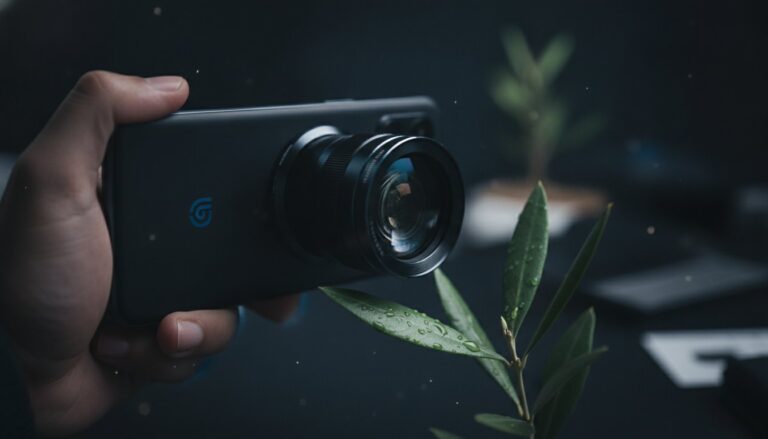
Different creators have different needs. Travel vloggers should prioritize the 16mm Wide Angle Lens for immersive storytelling. Narrative filmmakers will find the anamorphic lens indispensable for that widescreen aesthetic. If you are a content creator looking to elevate your on-camera presence, our guide to the best anamorphic lens for vlogging in 2026 covers exactly which optics deliver the most cinematic impact for your specific shooting style. If you specialize in product reviews or nature content, the 10X Macro Lens for Smartphones is your secret weapon. It captures extreme details that the standard iPhone lens simply cannot resolve. This lens is perfect for high-impact B-roll that highlights textures and fine craftsmanship. Always select your iPhone filmmaking kit components based on your specific device model and the storage capacity needed for high-bitrate ProRes recording.
Maintenance and Gear Longevity
High-resolution 4K and 8K video is unforgiving. Even a tiny fingerprint can ruin a shot by creating muddy highlights or unintended hazy flares. Lens flares should come from your glass, not your smudges. A dedicated cleaning kit is non-negotiable. Use professional Lens Cleaning Spray and high-quality microfibers before every shoot to ensure total optical clarity. Clean glass is the foundation of sharp, professional footage.
Protect your investment through proper storage. Keep your filters in their cases to prevent scratches or degradation of the optical coatings. Before you head out to a location, run through a final checklist. Check your lens mounts for stability. Verify your filter strengths. Ensure your glass is spotless. These small habits prevent technical failures and keep your creative momentum high. Professionalism is found in the details of how you treat your gear. Take care of your tools, and they will capture your best work for years to come.
Own the Future of Mobile Cinema
You have the vision. Now, you have the roadmap to execute it. Transforming your smartphone into a professional-grade cinema camera is no longer a futuristic dream; it’s a technical reality. By choosing high-performance glass and mastering light control, you eliminate the “mobile” look and capture pure cinematic gold. The gap between Hollywood and your pocket has officially closed. You are no longer limited by your hardware, but by the scale of your imagination.
Your iPhone filmmaking kit should be as dynamic as your creativity. Whether you are using PRO 1.55X Anamorphic glass for ultra-wide storytelling or relying on magnetic mounting for 1-second filter swaps, the right gear makes professional output attainable. This setup provides the speed of a smartphone with the optical physics of a traditional rig. We provide the tools and 24/7 support for creators worldwide to ensure your production never hits a technical wall. You have everything you need to start producing viral, high-production-value content today.
Build your professional iPhone filmmaking kit at LensLab and elevate your visual storytelling. The world is waiting for your story. Grab your gear and start shooting.
Frequently Asked Questions
What is the most important piece of gear in an iPhone filmmaking kit?
High-quality external glass is the most critical component of your setup. While the iPhone sensor is incredibly powerful, the lens determines the character, texture, and depth of your image. Investing in professional optics is the only way to overcome the flat, digital look of standard mobile sensors. It is the foundation of any serious iPhone filmmaking kit.
Do I really need an anamorphic lens for cinematic video?
You need an anamorphic lens if you want to capture true widescreen aspect ratios and signature horizontal flares. Software can crop your video to look wider, but it cannot replicate the organic light physics or oval bokeh of real glass. An anamorphic lens physically squeezes more information onto your sensor for a professional, high-budget aesthetic. To understand exactly how squeeze ratios work and which optic suits your shooting style, read our full smartphone anamorphic lens guide for cinematic mobile video.
What is the 180-degree shutter rule for mobile filmmaking?
The 180-degree rule is a cinematography standard where your shutter speed is double your frame rate. If you shoot at 24fps, your shutter should be set to 1/48. This creates the natural motion blur the human eye expects in a movie. Using this rule prevents your footage from looking jittery or hyper-sharp.
Will these lenses work with my iPhone 16 or 17 Pro Max?
Yes, these optics are fully compatible with the latest flagship devices. The iPhone 17 Pro Max is a powerhouse with its triple 48MP camera system and ProRes RAW capabilities. Using professional lenses with these high-resolution sensors ensures you capture every bit of detail. Just pair them with a compatible magnetic mount for a secure fit.
How do ND filters improve my mobile video quality?
ND filters act as “sunglasses” for your camera to prevent overexposure in bright environments. They allow you to maintain a slow shutter speed even in direct sunlight. This is essential for achieving smooth motion blur and avoiding the “choppy” look common in casual smartphone videos. They give you total control over your exposure.
Can I use multiple filters at the same time on my smartphone?
You can stack filters using magnetic mounting systems to build a unique visual signature. For example, you might pair an ND filter with a star filter to control light while adding artistic flares. This modularity allows you to customize your iPhone filmmaking kit for any creative scenario. Be careful to check for vignetting when stacking on ultra-wide lenses.
Do I need a special app to use an anamorphic lens?
You need a professional camera app that supports “de-squeezing” the footage in real-time. Apps like Blackmagic Camera or the Moment Pro Camera app allow you to see the corrected widescreen image while you shoot. This is vital for accurate framing and ensures your final export has the correct cinematic proportions.
How do I clean my smartphone lenses without scratching them?
Use a professional Lens Cleaning Spray and a fresh microfiber cloth for every shoot. Apply the spray to the cloth first rather than directly onto the glass. Wipe gently in a circular motion to remove oils and dust. Keeping your optics spotless is the simplest way to maintain 4K and 8K image clarity.