
How to Photograph Insects with Your Smartphone
The secret to insect macro photography with a phone is timing more than gear: shoot early in the morning or on cool, overcast days when insects move slowly, approach low and gradually, and use a clip-on macro lens with enough working distance that you don’t scare your subject. Add soft light and a steady hand, and your phone can capture compound eyes, wing veins and dew-covered antennae in startling detail.
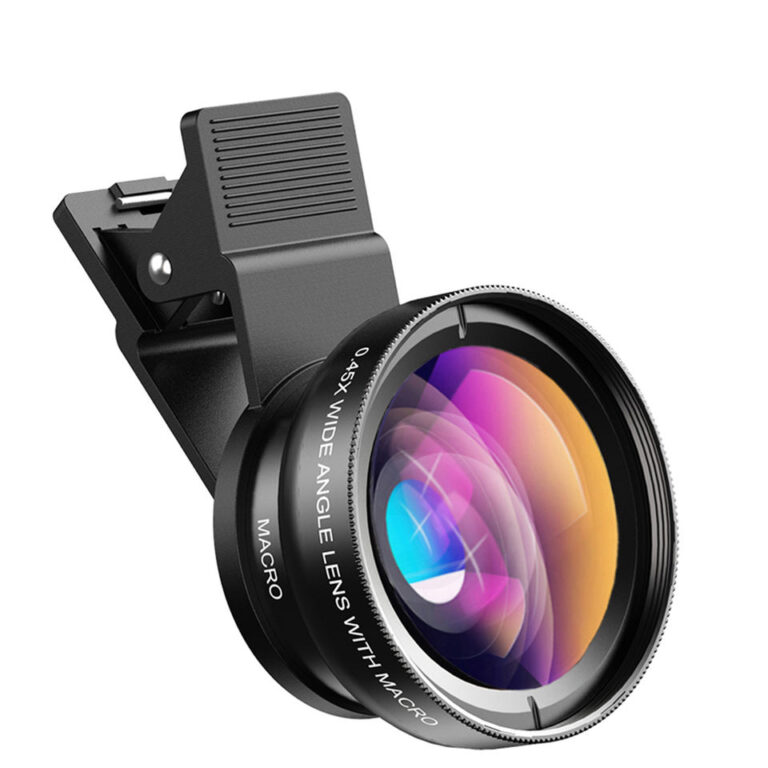
Choose the right lens for living subjects
With insects, working distance is everything. Very high-magnification lenses need you to be almost touching the subject, which works for a sleeping beetle and fails with a nervous fly. A longer focal length macro gives you room:
- The 75mm super macro lens lets you work from a little farther back, which is friendlier to living subjects and leaves space for light to reach them.
- The Apexel 10x/20x macro lens with built-in LED gets you into extreme detail like individual eye facets on calm subjects, and its ring light helps under leaves and in shade.
A lot of insect photographers carry both: the longer macro for approach and framing, the stronger one for still subjects or details.
When and where to find cooperative insects
Early morning
Insects are cold-blooded. At dawn, especially after a cool night, many are sluggish until the sun warms them. Dragonflies, butterflies and bees resting on stems often stay still long enough for careful framing, sometimes covered in dew.
Cool or cloudy days
Overcast skies give soft light and slower insects. It’s the best combination for beginners.
Flowers in bloom
Pollinators return to the same patch repeatedly. Choose one flower cluster, sit still nearby, and wait. Hoverflies in particular hover in place long enough to photograph.
Your own backyard
Garden walls, outdoor lights in the morning (moths resting after a night near the lamp), leaf undersides and woodpiles are full of subjects.
How to approach without spooking them
- Move slowly and keep low. Sudden shadows and fast movements trigger escape responses.
- Don’t cast your shadow over the subject. Approach with the sun to the side.
- Pre-set your camera before approaching. Lens attached, 1x camera selected, exposure roughly set.
- Get close from a distance first. Find focus on a nearby leaf at about the right distance, then slowly slide toward the insect.
- Brace yourself. Rest your elbows on your knees, the ground or a fence. Hold the stem gently with your other hand if it’s swaying, without touching the insect.
- Shoot immediately, then refine. Get a safe shot first, then try for better angles.
Focus technique for insects
Autofocus often grabs the background or the leaf instead of the insect. Lock focus at the closest distance, then move the phone in and out by millimeters until the eyes are sharp. Burst mode is your friend: shoot a burst while slowly rocking forward, then pick the frame where the eyes are crisp.
Always prioritize the eyes. A sharp eye with a soft body looks intentional; a sharp leg with blurry eyes looks like a miss.
If your shots are consistently soft, the troubleshooting tips in our guide to the best macro lens for smartphone photography cover working distance and magnification choices in more depth.
Lighting for bug macro
- Soft natural light from a cloudy sky or open shade shows detail without harsh reflections on shiny shells.
- Diffuse harsh sun with a white sheet of paper, a reflector or even your hand as a shade, then bounce light back with a white card.
- LED ring light fills shadows under leaves. Use the lower power setting; maximum power can create flat, shiny highlights on beetles.
- Backlight through translucent wings or petals creates glowing, artistic shots.
Composition ideas
- Eye-level portrait: get down to the insect’s level instead of shooting from above.
- Head-on: both eyes in focus, symmetrical, intense.
- Profile: the whole body parallel to the phone, which keeps more of it in focus.
- Environmental: the insect smaller in frame on a flower, showing behavior.
- Abstract detail: wing scales, eye facets, the fur on a bumblebee.
Keep backgrounds simple. Moving slightly to put green foliage or sky behind the subject gives a clean, blurred backdrop.
Depth of field and focus stacking
At high magnification, only a sliver is sharp. Shooting the insect in profile helps. For still subjects, like a dew-covered dragonfly at dawn, you can try focus stacking: take a series while moving focus from front to back, then merge them in a stacking app. It only works if the subject and the plant stay perfectly still.
Shooting ethically
- Never chill, glue, pin or restrain insects for photos.
- Don’t break branches or flatten plants to get a better angle.
- Watch for stinging insects; give bees and wasps space and avoid nests.
- Leave the scene as you found it.
- Be careful when identifying subjects online; ask local experts rather than guessing.
Video tips
Insect video is mesmerizing: a bee working a flower, an ant carrying a crumb. Use a tripod or beanbag, lock focus, and let the insect walk into the focus zone. Shoot at 60 fps or higher for smooth slow motion of wings and feeding.
Quick checklist
- Go out early morning or on a cool, cloudy day
- Lens attached and camera on 1x before you approach
- Approach low and slow, no shadow on the subject
- Lock focus, rock the phone, shoot bursts
- Eyes sharp above all
- Soft or diffused light, LED on low for fill
- Simple background, eye-level angle
- Respect the subject and habitat
FAQ
What’s the best magnification for insects?
Moderate magnification with longer working distance is easiest for living insects. Save very high magnification for tiny or completely still subjects.
How do I photograph moving insects?
Pre-focus on a flower they visit and wait for them to land in the focus zone. Shoot bursts and keep the sharpest frame.
Why are my bug photos noisy?
Low light forces high ISO. Add light with an LED or a reflector, or shoot in brighter shade.
Can I photograph insects through glass or a jar?
You can, but glass reduces sharpness and adds reflections. Natural settings look better and are kinder to the insect.
A whole tiny world is waiting in your garden.
Use the 75mm macro for approachable working distance and the LED macro for extreme detail, then save with the Mix & Match – any 3 for $129 bundle. Explore the shop – free worldwide shipping and easy returns.