Cinematic Phone Camera Accessories: 2026 Creator’s Guide
Why does your high-end smartphone footage still look like a home movie instead of a Hollywood feature? You’ve probably noticed that even with 4K resolution, your shots often feel overly sharp, digital, and flat. It’s a common frustration for creators across Israel who want to elevate their storytelling but feel limited by the native camera app. The truth is that professional results aren’t about software filters; they come from high-quality cinematic phone camera accessories that control light and perspective. You deserve to see your creative vision come to life exactly how you imagined it.
We agree that standard 16:9 aspect ratios can feel boring and daylight highlights shouldn’t be blown out. This guide promises to reveal the essential tools you need to transform your device into a professional production rig. You’ll learn how to achieve natural motion blur, capture that iconic widescreen cinematic aspect ratio, and master professional light control. We are diving into everything from anamorphic lenses to magnetic filter systems. Let’s turn your phone into the ultimate filmmaking tool today.
Key Takeaways
- Capture the iconic 2.39:1 widescreen look. Use the PRO 1.55X BLUE ANAMORPHIC LENS to avoid losing image resolution.
- Stop overexposed shots. Master light control and natural motion blur with ND filters even in bright sunlight.
- Elevate your storytelling with macro lenses and special effect filters. These create a mood that software simply cannot replicate.
- Discover why high-quality cinematic phone camera accessories are the secret to transforming standard mobile video into professional film.
- Start your kit right. Use the JJC Magnetic Adapter for a fast and reliable production workflow.
Why Cinematic Phone Camera Accessories Matter in 2026
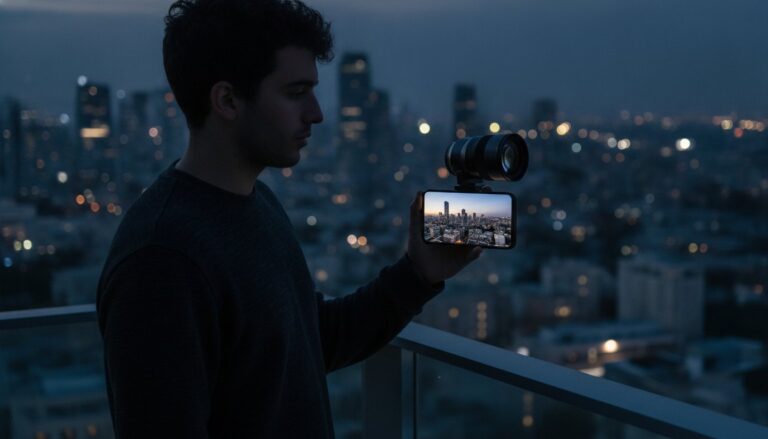
Modern smartphones are incredible pieces of technology. They pack massive sensors and advanced AI processing into your pocket. However, raw footage often betrays its digital origins. True cinema is defined by intentional light control and specific focal lengths. To achieve this, you need high-quality cinematic phone camera accessories that manipulate the image before it ever reaches the sensor. These tools aren’t just add-ons. They are the bridge between a casual social media post and a high-end cinematic masterpiece.
Smartphone sensors are more powerful than ever, but they face physical limitations. Most devices rely on fixed apertures and extremely wide-angle lenses. This setup is great for snapshots but terrible for storytelling. Professional film requires a specific look that software cannot fully replicate. You need the ability to control motion blur, manage highlights, and choose your perspective. By adding professional-grade optics, you take back creative control from the device’s automated settings. You stop being a passive user and start being a director.
The Problem with “Raw” Smartphone Video
Ever notice how phone video looks too “real”? High shutter speeds create a stuttering, clinical effect that kills the cinematic vibe. This is often called the “soap opera effect.” Digital sharpness makes every detail look harsh. Standard mobile sensors also struggle with a shallow depth of field. This results in a flat image where everything from the foreground to the horizon is in sharp focus. It’s distracting for the viewer.
External optics change the game. They soften the digital edge and introduce organic textures. High-end filters allow you to follow the 180-degree rule. This rule dictates that your shutter speed should be double your frame rate. Shooting at 24fps with a 1/48 shutter speed creates that smooth, natural motion blur we see in theaters. Without the right tools, your phone will automatically crank the shutter speed in bright Israeli sunlight. The result is jittery, unwatchable footage. Accessories fix this at the source.
The Creator Ecosystem: Beyond the Smartphone
Think of your phone as the brain of a larger system. In 2026, the most successful creators in Israel treat their devices like modular filmmaking tools. They build a “mobile rig” tailored to their specific needs. This transition from hobbyist to professional requires a shift in mindset. Your gear should solve specific visual problems.
Building a kit isn’t about buying every gadget available. It’s about strategic investment. Focus on tools that provide professional light control and unique optical perspectives. A modular approach lets you scale your production value as your skills grow. Professional results are now a matter of having the right tools rather than years of technical training. You have the vision. Now, you just need the hardware to match it.
Mastering the Widescreen Look: Anamorphic and Wide-Angle Lenses
The cinematic look begins with the frame itself. Most smartphones record in a standard 16:9 ratio. This looks like television, not film. To achieve that legendary cinema feel, you need to expand your horizon. Anamorphic lenses are the ultimate cinematic phone camera accessories for this task. They allow you to capture a 2.39:1 aspect ratio. This is the gold standard for feature films. You get more of the scene without losing a single pixel to cropping. It’s about maximizing your sensor’s potential and giving your audience a truly immersive experience.
The PRO 1.55X Blue Anamorphic Lens
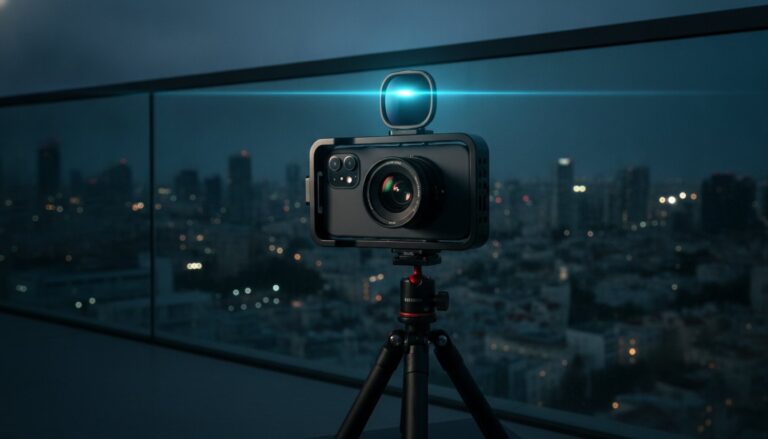
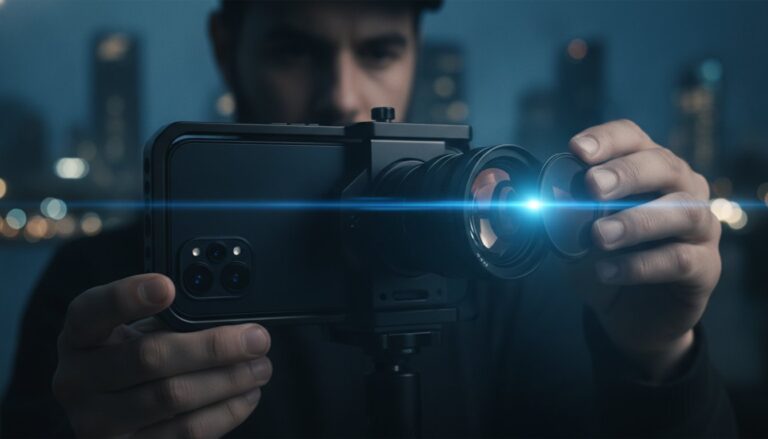
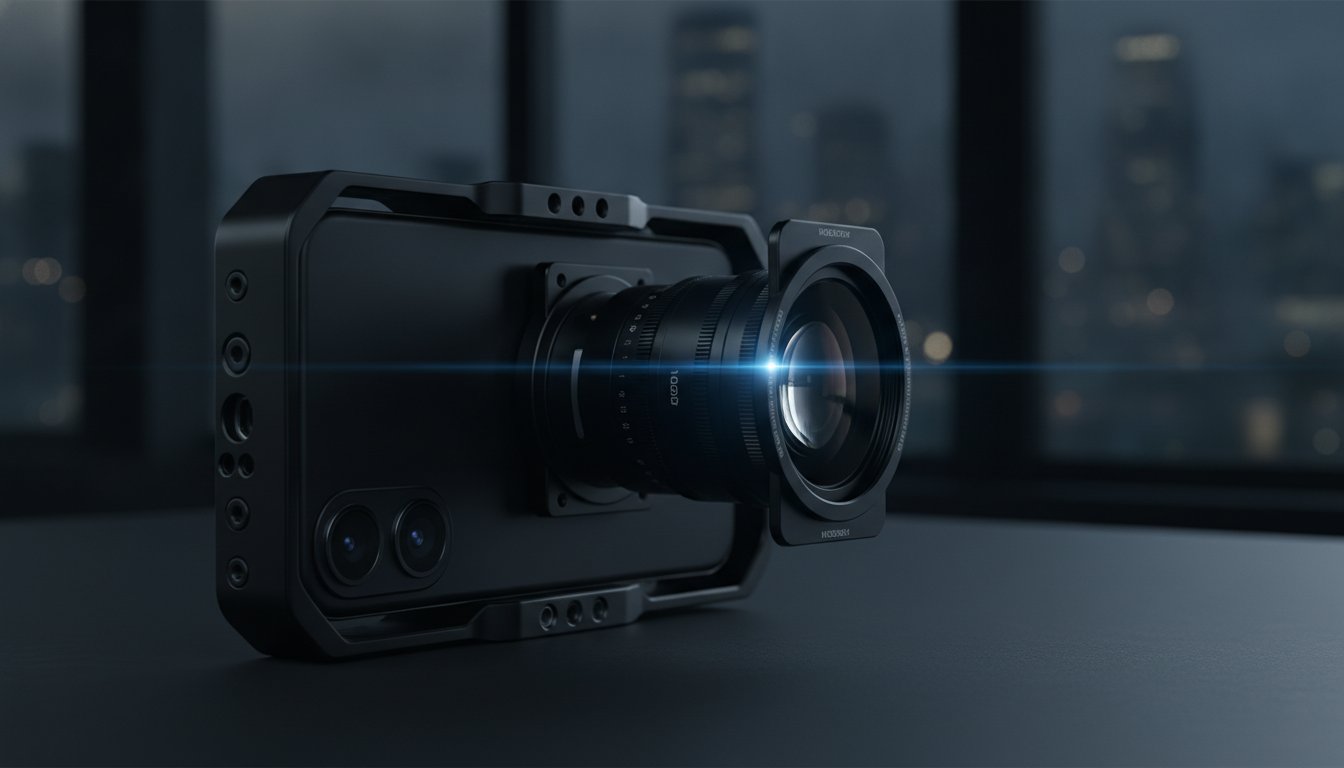
This lens is a game changer for mobile filmmakers across Israel. It works by optically squeezing more horizontal information onto your sensor. When you “de-squeeze” this footage in post-production, the image expands. The result is a breathtakingly wide field of view. It also produces those iconic blue horizontal lens flares. These flares are a Hollywood staple. They add a layer of professional polish that software filters can’t replicate. You aren’t just taking a video; you’re crafting a scene. Use a professional app to handle the de-squeeze process instantly. It’s a simple step for a massive visual payoff. Check out the PRO 1.55X BLUE ANAMORPHIC LENS to start your journey.
16Mm Wide Angle Lenses for Epic Landscapes
Sometimes you need to tell a bigger story in a tight space. A 16mm wide-angle lens is perfect for establishing shots. You might wonder why you shouldn’t just use your phone’s built-in “0.5x” ultra-wide lens. The answer is glass quality. Internal ultra-wide lenses often suffer from “fisheye” distortion and soft edges. An external 16mm lens provides edge-to-edge clarity. It reduces chromatic aberration, keeping your colors true. This is essential for professional landscapes or architectural videography. High-quality glass ensures your image remains sharp and undistorted. You want your viewers to focus on the subject, not the lens distortion.
Optics are the heart of your mobile rig. Cheap plastic lenses will ruin even the best smartphone sensor. They introduce blur and weird color fringes. Professional glass preserves the high resolution of your device. It ensures that your 4K footage actually looks like 4K. When you invest in quality, you see it in every frame. It’s the difference between a clip that looks “mobile” and one that looks “cinematic.” If you’re building around an Apple device, our complete iPhone filmmaking kit guide for 2026 walks you through every essential piece of hardware you need to assemble a professional production rig.
- Resolution: Keep every pixel of your 4K sensor without cropping.
- Flares: Achieve organic, blue horizontal light streaks.
- Depth: Create a sense of scale that standard lenses miss.
- Clarity: Maintain sharp focus from the center to the edges.
Controlling Light: ND Filters and the 180-Degree Rule
Imagine shooting on a bright afternoon under a brilliant sun. The light is intense. Your phone sensor is flooded with light. To compensate, the camera app spikes the shutter speed. This is where cinematic phone camera accessories like Neutral Density (ND) filters become essential. Think of them as high-performance sunglasses for your lens. They reduce the amount of light entering the sensor without changing the color of the scene. This control is the secret to moving beyond the “digital look” and achieving a truly professional aesthetic.
Without these tools, your footage will often suffer from blown-out highlights. You lose detail in the clouds and the skin tones look plastic. By using ND filters, you regain the ability to use manual settings effectively. You are no longer at the mercy of the phone’s auto-exposure algorithm. Instead, you dictate how the light interacts with your sensor. It’s the first step toward mastering the art of mobile cinematography.
The 180-Degree Shutter Rule for Mobile
Why does professional film look so smooth compared to phone video? It’s the 180-degree shutter rule. To get natural motion blur, your shutter speed should be double your frame rate. If you shoot at 24fps, your shutter speed must be 1/48 of a second. Smartphones struggle here. In daylight, a phone will often jump to a shutter speed of 1/1000 or higher. This creates a jittery, “choppy” look that feels clinical and cheap. ND filters are the key to natural motion blur because they block light, forcing the camera to maintain a lower shutter speed. Learn more about light control in our GoPro HERO 12 ND filters guide to see how this logic applies to your entire mobile production kit.
Using Filter Sets for Different Lighting Conditions
Lighting changes fast, especially during a sunset shoot. You need a range of strengths to stay in control. ND8 filters are great for overcast days or the blue hour. ND16 is your workhorse for bright afternoons. If you’re shooting in direct desert sun, an ND32 or ND64 is necessary. Switching these manually can be slow. That’s why the JJC Magnetic Lens Filter Mount for iPhone is a vital part of a modern kit. It allows you to snap filters on and off in seconds. This speed is critical when the light is fading. You won’t miss the perfect shot because you were fumbling with screw-on threads.
Mastering light is mastering the medium. Once you control the shutter, you control the emotion of the movement. Your footage will look intentional and polished. It’s a simple technical fix that provides an immediate professional upgrade. You have the vision. Use these tools to ensure your hardware can actually deliver it.
Elevating Production Value: Macro and Special Effect Filters
Great cinematography isn’t just about wide vistas. It’s about the intimate details that build a world. While wide lenses set the stage, macro and special effect filters provide the soul of your story. These cinematic phone camera accessories allow you to capture textures and light patterns that standard lenses simply ignore. You aren’t just recording reality. You are interpreting it through professional-grade glass. This is how you move from a basic recording to a high-value production that keeps your audience’s eyes glued to the screen.
The difference between a professional optical tool and a “toy” lens is clarity. Generic plastic kits from massive marketplaces often degrade your image. They turn your 4K or 8K footage into a blurry mess. Professional glass preserves every detail. It ensures that your sensor’s resolution isn’t wasted. When you use high-quality optics, you maintain the sharp edges and vibrant colors your phone was designed to capture. You deserve gear that matches your creative ambition.
10X Macro Lenses for Cinematic B-Roll
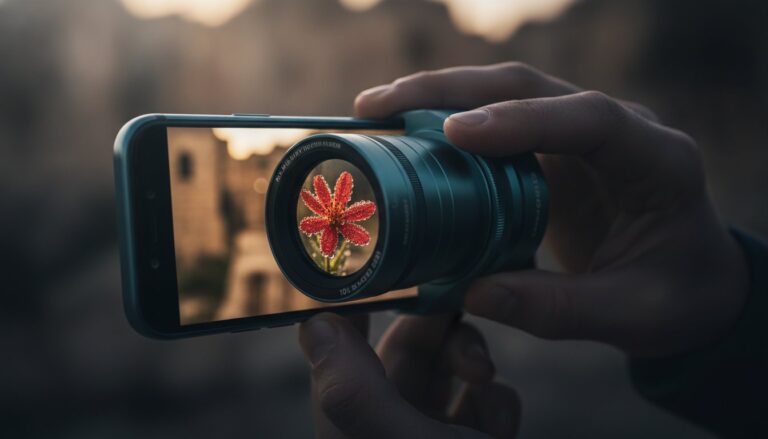
Macro shots are the secret weapon of professional B-roll. Use a 10X Macro Lens to capture the fine textures of a subject, the intricate patterns of an iris, or the details of a product. These shots add a layer of depth to your film that feels expensive and intentional. Macro cinematography naturally creates an extremely shallow depth of field. This helps isolate your subject and creates a beautiful, soft background blur.
Stabilization is critical when shooting this close. Even the smallest vibration looks like an earthquake at 10X magnification. Use a tripod or a stable surface to keep your frame rock-solid. This precision allows the viewer to appreciate the details without distraction. It’s a simple way to make your mobile project feel like a big-budget feature.
Star Filters and Night Cinematography
Night scenes in Israeli cities offer incredible creative opportunities. Point light sources like street lamps and car headlights can become artistic elements. A Star Filter transforms these lights into stunning, multi-pointed flares. This adds a “dreamy” or nostalgic aesthetic that software filters often fail to replicate accurately. It creates a mood of wonder and cinematic flair that feels organic to the lens.
Optical glass creates light patterns that feel “baked-in” to the footage. This is much more convincing than adding digital effects in post-production. It gives your night shots a professional polish that stands out on social media. Whether you are shooting a music video or a city travelogue, these filters provide a unique visual identity. Ready to upgrade your visual toolkit? Explore our Star Filter for Smartphones to start creating magic today.
Building a professional kit is about solving problems and creating moods. You have the wide shots and the light control. Now, add the details and the atmosphere. These specialized tools ensure that every second of your footage contributes to the overall cinematic experience. You have the vision; these tools give you the reach.
Building Your Professional Mobile Cinematography Kit
Building a professional kit is about creating a seamless system that supports your creative vision. You don’t need a bag full of gadgets to see results. Success starts with the two most impactful cinematic phone camera accessories: a high-quality anamorphic lens and a reliable ND filter set. These tools provide the foundation for cinematic widescreen visuals and perfect motion blur. Once you have the optics, focus on how you’ll manage them in the field. Invest in dedicated cases to protect your glass from scratches and desert dust. A single piece of grit can ruin a high-end lens during a shoot in the Negev or a busy Tel Aviv street. High-end results require high-end protection.
Professionalism is also about maintenance. Never forget the small details that keep your footage crisp. Fingerprints and oils create a distracting digital “haze” that ruins contrast and sharpness. This isn’t the artistic glow you’re looking for; it’s just a dirty shot. Always keep a professional Lens Cleaning Spray and a fresh microfiber cloth in your kit. Clean your optics before every single take. It’s a five-second habit that preserves the integrity of your 4K sensor. Your gear is an investment in your career. Treat it with the respect it deserves.
The Rapid Setup Workflow
Speed is everything on a professional set. Traditional clip-on lenses are often slow and prone to misalignment. For serious creators, magnetic systems are the superior choice. The JJC Magnetic Lens Filter Mount Adapter for iPhone allows for instant changes. You can swap filters in a heartbeat as the sun dips below the horizon. This efficiency keeps your creative momentum high. You won’t miss the perfect shot because you were fumbling with screw-on threads. Organize your gear for quick access. Keep your most-used filters in a side pocket and your cleaning kit within reach. A streamlined workflow allows you to focus on the story instead of the hardware.
Taking the Next Step as a Creator
Don’t feel pressured to buy everything at once. Growth happens when you master one tool at a time. Start with the anamorphic look and learn how it changes your framing. Then, add light control to master motion. The best gear is the equipment that stays in your pocket and actually gets used. Mobile cinematography is about the perfect balance of freedom and quality. You now have the roadmap to build a rig that rivals traditional cinema cameras. It’s time to stop planning and start filming. Elevate your content today and browse the LensLab collection to find your next essential tool.
Take Command of Your Creative Vision
The gap between smartphone clips and professional cinema has never been smaller. You now understand how to master the 2.39:1 widescreen ratio and why shutter control is the secret to organic motion blur. High-quality cinematic phone camera accessories empower you to bypass digital limitations and shoot with true artistic intention. From the iconic flares of a Professional 1.55x Anamorphic Lens to the rapid efficiency of magnetic mounting systems for iPhone, the right tools are finally within your reach. LensLab is proud to offer worldwide shipping to over 20 countries to ensure every creator can access elite optics regardless of their location.
Your phone is a powerful engine, but your unique vision is the real fuel. Stop settling for “good enough” footage and start producing work that demands attention from your audience. You have the technical knowledge to build a rig that performs under any lighting condition. It’s time to show the world what you can do with the right glass and a bold idea. Upgrade your mobile filmmaking gear at LensLab and start your next production today. Your story deserves to be told with professional clarity. Go out and capture it.
Frequently Asked Questions
Do I really need an anamorphic lens for a cinematic look?
An anamorphic lens isn’t strictly mandatory, but it’s the most effective way to achieve a true “big screen” feel. It provides a unique widescreen aspect ratio and organic lens flares that digital cropping simply can’t replicate. This tool allows you to use your entire sensor while still getting that 2.39:1 look, which is a hallmark of professional filmmaking.
What is the best ND filter strength for shooting video in direct sunlight?
An ND16 or ND32 filter is typically the best choice for bright, direct sunlight conditions in Israel. These strengths allow you to keep your shutter speed low enough to maintain natural motion blur without overexposing the frame. If you’re shooting in extreme desert glare, an ND64 might be necessary to keep your highlights under control and your image professional.
Are magnetic lens filters better than clip-on lenses for iPhone?
Magnetic systems offer superior speed and precision compared to traditional clip-on mounts. Using a system like the JJC Magnetic Lens Filter Mount ensures your optics are perfectly aligned with the phone’s sensor every time. This prevents vignetting and allows you to swap filters in seconds during fast-paced shoots. It’s a significant upgrade for any serious creator’s workflow. For a deeper look at how these components fit together, explore our complete iPhone filmmaking kit breakdown for 2026 to see the full picture of what a professional mobile setup requires.
Can I use these cinematic accessories on both Android and iPhone?
Most high-quality cinematic phone camera accessories are designed to be universal or have specific mounting plates for various models. While magnetic systems are often optimized for MagSafe-compatible iPhones, universal mounts allow Android users to enjoy the same professional glass. Always check the mounting specifications for your specific device to ensure a perfect fit before you start your production.
How do I “de-squeeze” anamorphic footage on my phone?
You can de-squeeze your footage using professional mobile editing apps or specialized camera apps during the recording process. Many creators use apps that automatically apply a 1.33x or 1.55x de-squeeze to the preview monitor. This ensures you’re framing your shots correctly for the final widescreen output. It saves you time in post-production and keeps your creative momentum moving forward.
Will external lenses work with my phone’s existing protective case?
Most external lenses require a specific mounting case or a thin, compatible cover to ensure the glass sits flush against the internal lens. Standard rugged cases are often too thick. They can cause blurry edges or heavy vignetting because the optics are too far from the sensor. For the best results, use a dedicated photography case designed specifically for mobile optics.
Does using an external lens reduce the video quality of my smartphone?
High-quality professional glass actually preserves and enhances your video quality by providing better light control and perspective. Cheap plastic lenses will degrade sharpness and introduce color fringing. Investing in premium optics ensures that your 4K or 8K sensor resolution remains crisp. You get the character of a real film lens without sacrificing the technical power of your device.